Guitar Chords
Learn every chord type step by step — from beginner open chords to barre chords and power chords. Select a chord below to get started.
Open Chords
The foundation for beginners — learn the chords that unlock real songs fast.
G Major
Powerful, bright, and essential
Learn chord →C Major
One of the most common chords
Learn chord →A Minor (Am)
Emotional and beginner-friendly
Learn chord →D Major
Sharp, punchy, great for strumming
Learn chord →A Major
Simple shape, used everywhere
Learn chord →E Major
Big, full sound and very common
Coming SoonE Minor (Em)
One of the easiest chords to play
Coming SoonBarre Chords
Moveable chord shapes that open up the whole neck.
F Major
The classic barre chord challenge
Coming SoonB Minor
Essential for minor key songs
Coming SoonPower Chords
Punchy, rock-ready chords used everywhere in modern guitar.
E5 Power Chord
The foundation of rock guitar
Coming SoonA5 Power Chord
Moveable power chord shape
Coming SoonWhat Are Open Chords?
An open chord is a chord shape that uses one or more open strings — strings played without pressing them down with your fretting hand. These chords are typically played in the first few frets of the guitar and are sometimes called open-position chords.
They sound fuller, louder, and more resonant because open strings ring freely. That rich, open sound is why open chords show up in thousands of songs — especially acoustic and beginner-friendly music.
From campfire classics to chart-topping hits, open chords form the backbone of pop, rock, folk, country, and acoustic music. Mastering them is the fastest way to go from learning guitar to playing songs.
Why Open Chords Matter for Beginners
Open chords train finger independence, stretches, and clean fretting. They teach you to avoid muting strings and to press confidently. Many open chords flow into each other — progressions like G → C → D show up everywhere and let you play songs fast.
With only a handful of open chords, you can play pop, rock, folk, country, and singer-songwriter classics.
Common Chord Problems (And Fixes)
“My chords sound buzzy or muted” — Press your fingers just behind the fret wire, use your fingertips (not the pads), and make sure unused fingers aren't touching nearby strings.
“My fingers hurt” — Totally normal. Practice in short sessions, take breaks, and give your fingertips time — calluses will form.
“Switching between chords is slow” — Practice chord changes slowly. Focus on smooth movement, not speed. Use guided exercises to build muscle memory.
Learn Chords Inside the Gibson App
The Gibson App listens to your guitar as you play and tells you if your chord is correct. Follow structured lessons with real-time feedback to master every chord faster.
START LEARNING IN THE APP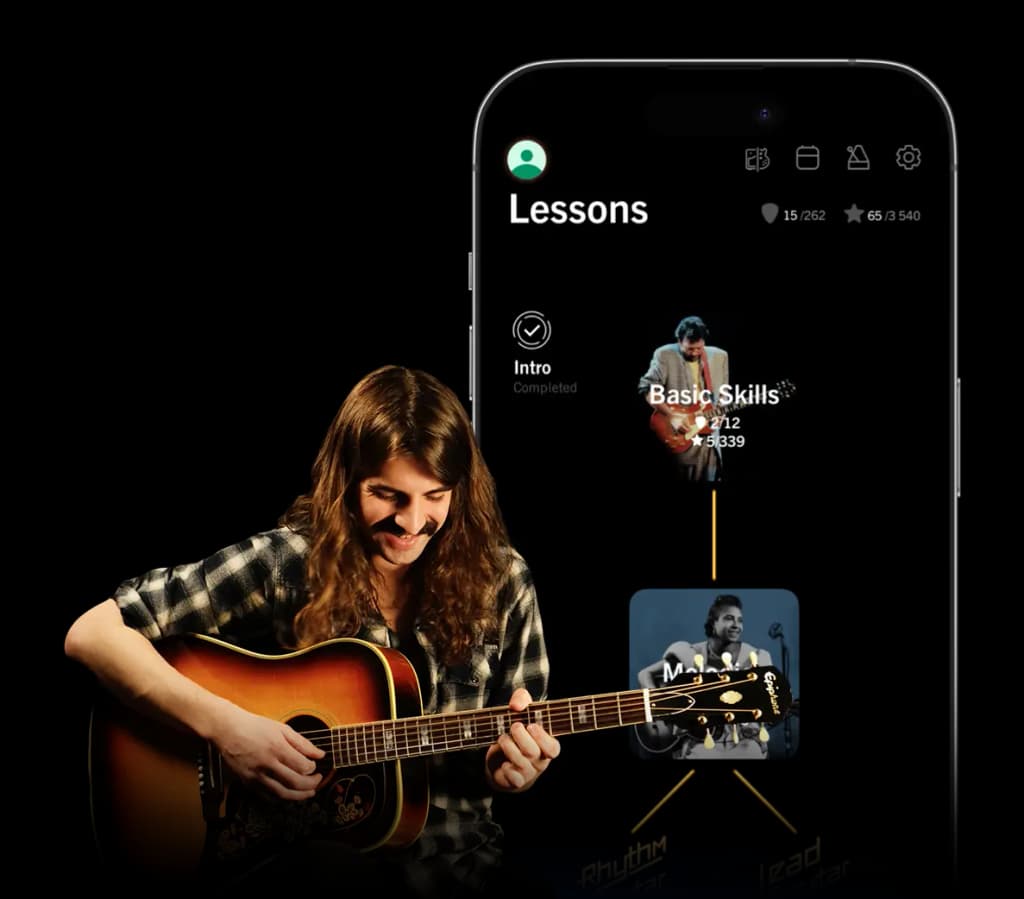
Frequently Asked Questions
Which chords should I learn first?
Start with open chords. G Major, C Major, A Minor, and D Major are the most common and will let you play thousands of songs.
How long does it take to learn a chord?
Most beginners can play a basic open chord cleanly within a few days of practice. Smooth transitions between chords usually take a few weeks of regular practice.
What's the difference between open and barre chords?
Open chords use open strings and are played in the first few frets. Barre chords use your index finger across all strings and can be moved anywhere on the neck, making them more versatile but harder for beginners.
Do I need to read music to learn chords?
No. Chord diagrams and finger placement guides are all you need to get started. The Gibson App shows you exactly where to put your fingers, no music reading required.
More Free Tools
Guitar Tuner
Tune by ear with real-time microphone pitch detection. Standard and alternate tunings.
Open
Online Metronome
Adjustable BPM, time signatures, subdivisions and accent beats for precise practice.
Open
Scale Finder
Find scale shapes across the fretboard in any key — major, minor, pentatonic and more.
Open