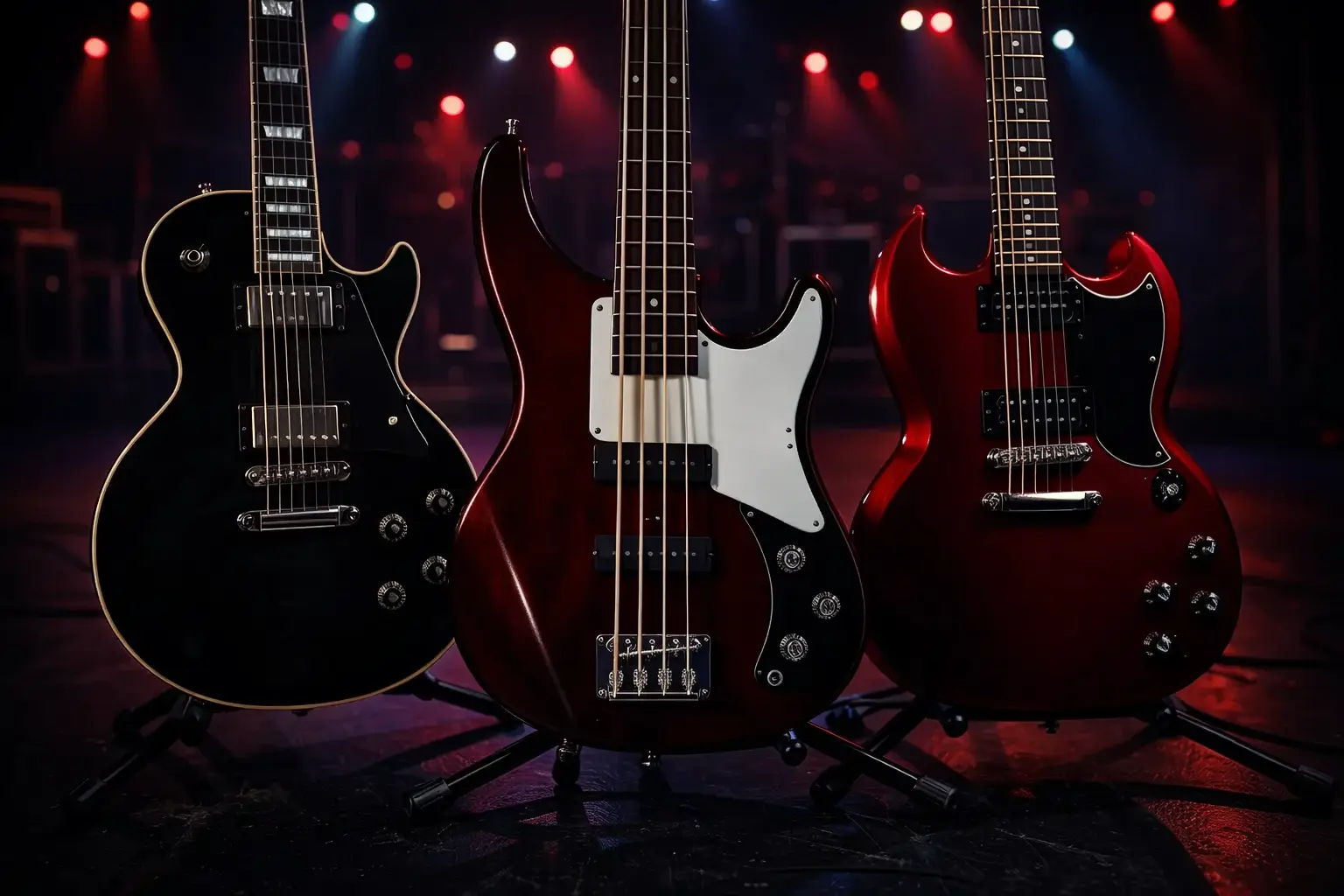
Learning a new instrument is one of the most rewarding things you can do — but if you're standing at the crossroads between bass and guitar, the decision can feel surprisingly tough. They're related instruments, sure, but they sound different, they feel different in your hands, and they'll shape the kind of musician you become in very different ways.
Here's everything you need to know to make the right call.
How Bass and Guitar Actually Differ
People casually call it a “bass guitar,” and while that's technically fine, it can blur the line between two distinct instruments. The term dates back to the mid-20th century, when builders began creating smaller, horizontally played electric basses to replace the enormous upright basses that had long anchored orchestras and jazz combos. Electrification gave these compact instruments the same thunderous low end as their towering predecessors — but in a form a guitarist could sling over a shoulder.
Today's electric bass and electric guitar may look like cousins at a glance, but spend a few minutes with each and the differences become obvious.
Size and Scale Length
Place a bass and a guitar side by side and the size gap jumps out immediately. In instrument terms, “scale length” — the vibrating string distance from nut to bridge — is the measurement that matters most.
Guitar
24"–25.5"
Standard scale length
Baritone guitars stretch to ~27" with lower tuning (B–E–A–D–F#–B), but they're still a different animal from a bass.
Bass
34"
Standard (long-scale) · Short-scale: ~30"
Longer neck, wider fret spacing — changes how your hand moves across the instrument entirely.
Short-scale basses deserve a special mention: their tighter fret spacing makes them a natural fit for players with smaller hands or guitarists making the switch to bass. They also tend to produce a thick and punchy tone thanks to the slightly heavier string gauges they typically use. Iconic short-scale models — like the Gibson SG Bass and the Epiphone EB-0 — prove that a shorter neck doesn't mean a smaller sound.
Strings: Count, Thickness, and Feel
The most visible difference between the two instruments is right there on the neck. A standard guitar has six strings; a standard bass has four. But both instruments have variations worth knowing about.
Guitar
6 strings
12-string models double each string for a lush, choral shimmer. Think “Stairway to Heaven” or “Wish You Were Here.”
Bass
4 strings
5- and 6-string models extend the range. Fretless basses strip the frets off entirely for a different sonic palette.
Beyond the number of strings, bass strings are noticeably longer, thicker, and pricier than guitar strings. They also come in more varieties:
Roundwound
The most common type. A steel core wrapped in round wire produces a bright, aggressive tone ideal for slap-style playing.
Flatwound
Wrapped in flat wire for a smooth, warm sound that jazz players love.
Tapewound
Metal windings coated in nylon for a softer feel and a mellow, almost upright-like tone.
Groundwound (half-round)
A hybrid: roundwound strings that are pressed or ground smooth on the surface. You get some brightness with less fret wear.
Which string type suits you depends largely on how you play — fingers, pick, or slap — and what tone you're chasing.
Tuning
The four strings of a bass correspond to the four lowest strings of a guitar (E–A–D–G), but they're tuned a full octave lower. So while both instruments have an open low E string, the bass E rumbles at a much deeper frequency.
Bass (Standard)
4 strings — one octave lower
Guitar (Standard)
6 strings — 4 shared notes + 2 higher
That octave gap is what gives a band its sense of weight and depth. To hear it in action, compare the guitar and bass parts on a song like Green Day's “Basket Case” — the bass riff anchors the track with a low-end punch the guitar simply can't replicate.
So, Which Is Easier to Learn?
This is the question everyone asks, and the truthful answer is: it depends on you.
Guitar
Tends to front-load its difficulty. Learning chord shapes, switching between them smoothly, and memorizing voicings across the neck is a steep early climb. But once those shapes click, you unlock rhythm playing, lead playing, and songwriting tools all at once.
Bass
Can feel more approachable at first — you're often playing single notes rather than multi-finger chord shapes, so you can start locking in with songs relatively quickly. But don't mistake “fewer strings” for “less skill.” Building solid bass lines requires a deep sense of timing, groove, and musical awareness.
The bass is the bridge between rhythm and harmony in a band, and playing it well is a serious craft.
Here's the good news: the two instruments share enough DNA that skills transfer easily. Learn one, and picking up the other later becomes much less daunting.
How to Decide: Bass or Guitar?
If the technical specs haven't settled the debate for you, try approaching it from a different angle — how music makes you feel.
You might lean toward guitar if you:
- •Gravitate toward melodies, harmonies, and solos when you listen to music
- •Want the versatility of playing chords and lead lines
- •Like the idea of writing songs on your own, even without a band
- •Get excited when a guitar solo kicks in
You might lean toward bass if you:
- •Feel music in your chest — you love low end and deep grooves
- •Naturally lock in with the rhythm and the drums
- •Enjoy collaboration and playing a supporting role that makes everyone else sound better
- •Want to be in demand — good bassists are harder to find than good guitarists, which can make joining a band much easier
Of course, personality stereotypes only go so far. For every reserved, background-dwelling bassist, there's a Les Claypool, a Flea, or a Bootsy Collins commanding the spotlight. And for every showboating guitarist, there's someone quietly holding down the rhythm from the side of the stage.
The Bottom Line
There's no wrong choice here. Both instruments are deeply rewarding, endlessly challenging, and capable of a lifetime's worth of musical exploration. Pick the one that excites you most, commit to consistent practice, and trust that the skills you build will serve you no matter where your playing takes you.
And if you eventually want to learn both? Even better — you'll be a more complete musician for it.
Start your musical journey today · 7-day free trial
Frequently Asked Questions
Common questions about choosing between bass and guitar.
Is bass easier than guitar?
Can I learn both bass and guitar?
What's the difference between a bass guitar and a regular guitar?
Do I need big hands to play bass?
Which instrument is better for playing in a band?
Should I start with bass or guitar if I've never played before?
What type of music is bass best for?
Is bass guitar a good first instrument?
What's more expensive — bass or guitar?
Can I use the Gibson App to learn bass or guitar?
Ready to Start Playing?
Whether you choose bass or guitar, the Gibson App gives you a structured path to learn guitar with interactive lessons, real-time feedback, and guidance from world-class musicians. Try it free for 7 days.
7-day free trial · No commitment