Guitar for People Living with PTSD
Guitar for PTSD: A Grounding Practice You Can Return To
When your mind races or your body feels on edge, you need something concrete. Something physical. Something that pulls you into the present moment instead of leaving you stuck in your head. Guitar does that.
Guitar is a wellness and creative tool, not a medical treatment. Always consult your healthcare provider for PTSD-related care.
PTSD can make the world feel unpredictable. Your nervous system stays on alert. Sleep is difficult. Focus is fragmented. And finding something that feels safe enough to return to, day after day, is harder than most people understand.
Guitar offers something unusual: a way to be fully present without having to think about the past or the future. Your hands are busy. Your ears are engaged. You’re following a pattern, and for a few minutes, the noise in your head gets quieter.
The Gibson App makes it easy to start and easy to come back. It gives you a clear path, short sessions, real-time feedback, and zero pressure. You control the pace, the volume, and how long you play. Nothing is forced.
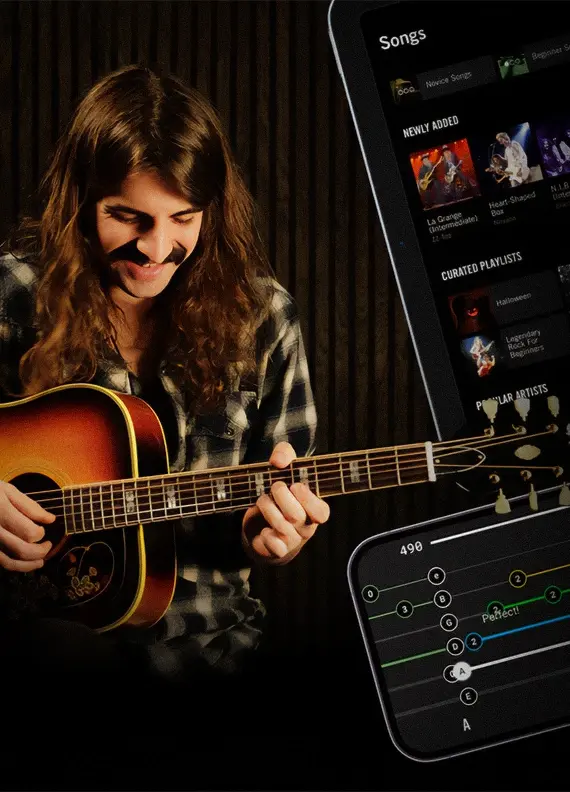
“Gibson App has been an amazing tool for me. As a veteran dealing with PTSD, having something structured to focus on has been incredibly grounding. I pick up my guitar when things feel heavy, and it helps.”
APP STORE REVIEW
Why Guitar Works for People with PTSD
PTSD changes the way your brain processes the world. Everyday moments can trigger a stress response. Your nervous system can feel stuck in “survival mode.” Guitar offers a way to gently shift out of that state, not by forcing relaxation, but by giving your mind and body something safe and absorbing to do.
01 · Grounding
Multi-Sensory Grounding That Feels Natural
Grounding techniques work best when they engage multiple senses at once. Guitar does exactly that: the physical feel of the strings under your fingers, the sound filling the room, the visual focus on your hand position, and the coordination between left and right hands. It anchors you in the present without requiring you to “try to relax.”
02 · Predictable Structure
A Safe Routine You Control
PTSD can make the unpredictable feel threatening. Guitar practice is the opposite: you decide when, where, how long, and how loud. The Gibson App gives you a clear next step every time you open it. No surprises, no sudden changes. Just a steady, predictable path forward at your own pace.
03 · Calm Focus
Something That Quiets the Noise
Hypervigilance keeps your brain scanning for threats. Playing guitar redirects that alertness toward something specific and safe. The rhythmic, repetitive nature of strumming and picking can help your nervous system shift from “fight or flight” toward a calmer state, without forcing it.
TL;DR
Guitar grounds you through your senses, gives you a safe routine you control, and offers calm focus that can quiet hypervigilance.
Your first session takes under 5 minutes. No pressure.
TRY YOUR FIRST LESSON FREE7-day free trial. Use code MENTALHEALTH for 20 % off.
Your First Session: Under 5 Minutes
No decisions to make. No complicated setup. Just your guitar, your phone, and a quiet moment. Here’s what happens:
Tune Your Guitar
The app has a built-in tuner. It listens through your phone mic and guides you one string at a time. A calm, simple start.
Play One String
You start with a single string, pressing different frets and getting familiar with the instrument. Focused, manageable, no overwhelm.
Hear Music Right Away
Within minutes, you’re playing simple patterns that actually sound like music. That moment of “I did that” is grounding in itself.
Total time: Under 5 minutes. Low stakes. You’ll know if it feels right.
No Setup. Just Pick Up and Play.
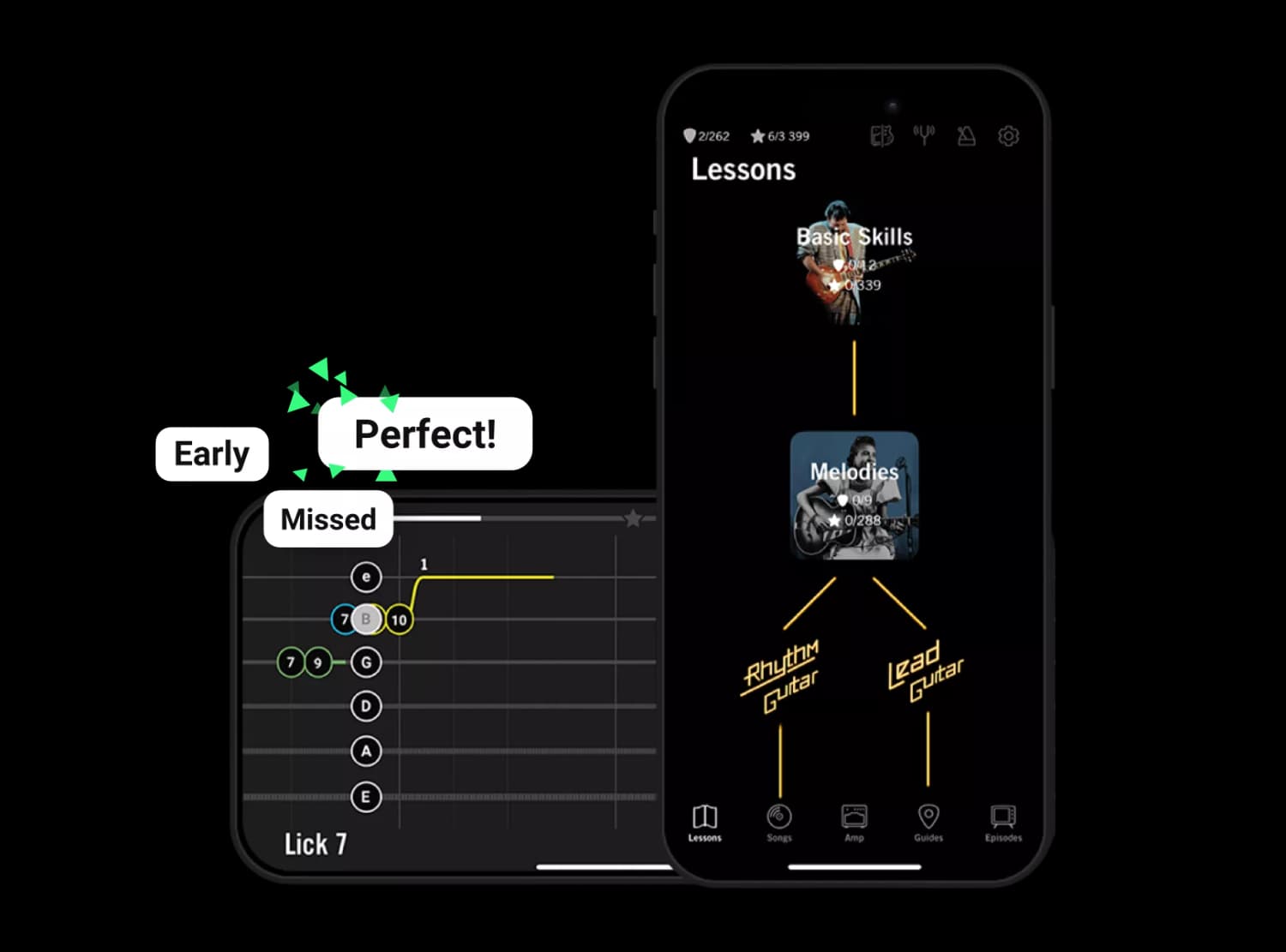
When energy is low and decisions feel heavy, the last thing you need is a complicated setup. The Gibson App gives you a pre-built path from absolute beginner to playing full songs. No gear to buy, no lessons to schedule, no choices about what to learn next. Just open the app and follow the next step.
- ✓Pre-built learning path — no decisions needed
- ✓Works with your phone mic — no extra gear
- ✓Designed by professional guitar teachers
- ✓Play at your own pace, on your own schedule
TL;DR
Download → pick up guitar → follow the path. No decisions required.
Built for Days When Everything Feels Like Too Much
The Gibson App is built around short sessions, clear progress, and constant feedback. Here’s how it helps when your world feels overwhelming.
Keeps You in the Present Moment
Real-time listening feedback
The app listens through your phone mic and responds instantly. You play a note, you hear it, you adjust. That continuous feedback loop keeps your attention anchored here, not somewhere else.
Small Wins That Add Up
270+ trackable skills
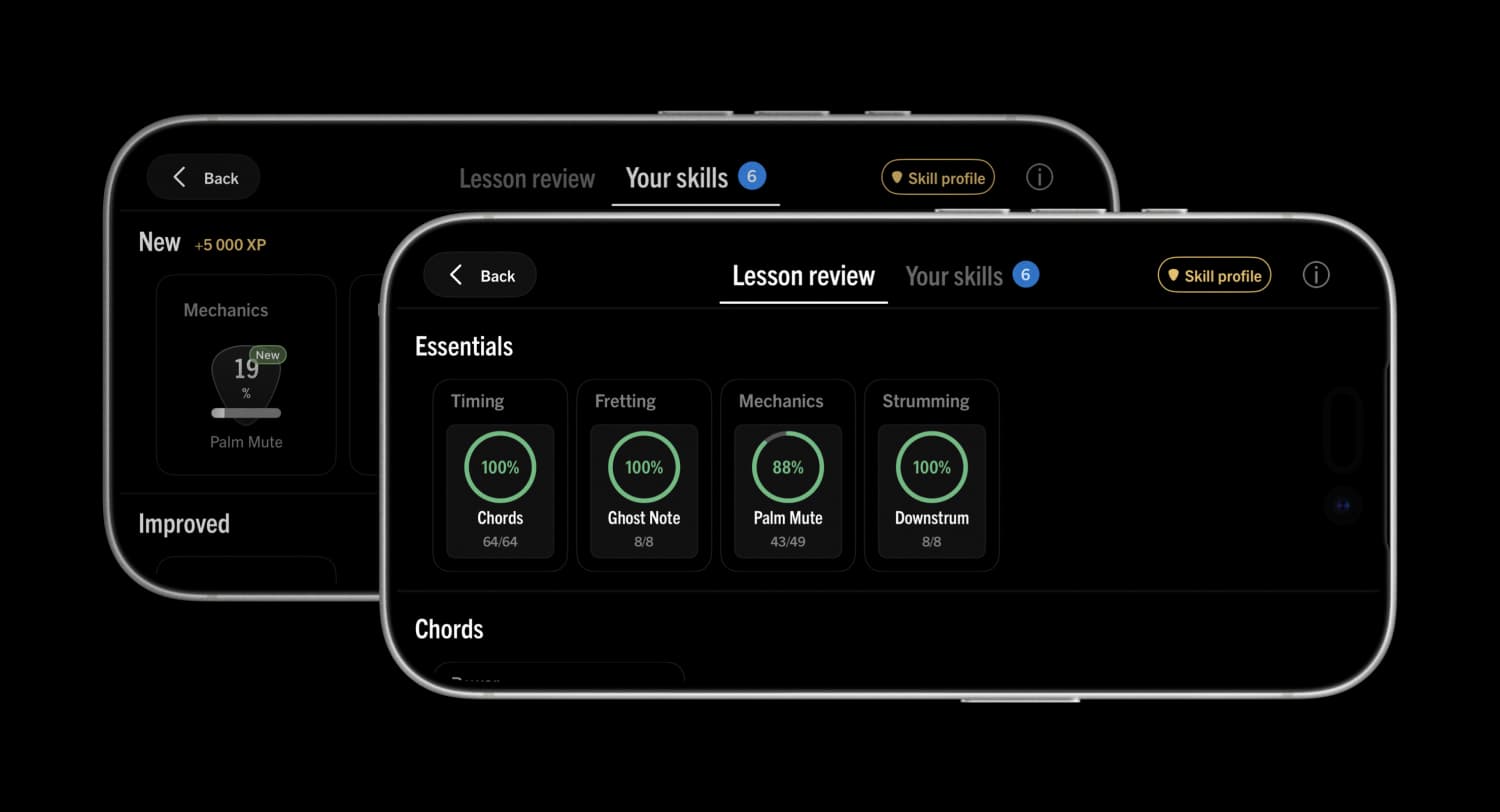
Every session builds real skills: chord changes, rhythm, timing, accuracy. You can see exactly what improved. On days when everything else feels stalled, having something you can point to and say “I got better at this” matters.
Even 3 minutes moves something forward.
No Penalty for Hard Days
The app remembers your progress permanently. Take a break for a day, a week, or a month. Come back and everything is exactly where you left it. No streak broken. No guilt. No starting over.
It’s built for real life, not perfect consistency.
You Control the Sound
If noise sensitivity is a concern, you’re in control. Play acoustic guitar softly. Play electric guitar through headphones — completely silent to everyone except you. There are no sudden sounds in the app. Every note comes from you.
Your progress is saved forever. Step away whenever you need to.
GIVE IT 5 MINUTESFree trial included. Save 20% with code MENTALHEALTH.
What a Week Actually Looks Like
Some days are manageable. Some aren’t. A realistic week with PTSD has gaps, and that’s completely normal. This still works.
Mon
5m
Tue
—
Wed
—
Thu
3m
Fri
—
Sat
7m
Sun
—
15 minutes total. 3 sessions. Still meaningful progress.
Bad days don’t erase good ones. Your progress is permanent.
Some weeks you’ll feel drawn to play every day. Other weeks, you won’t pick it up at all. Both are fine. The app holds your place and meets you wherever you are, whenever you’re ready.
3 min
is enough
270+
skills tracked
0
pressure
Guitar as a Grounding Practice
Guitar is a wellness tool, not a medical treatment. Always consult your healthcare provider.
Grounding is about bringing yourself back to the present moment when your mind pulls you elsewhere. Most grounding techniques ask you to focus on your senses: what you see, hear, feel, touch. Guitar engages all of them at once, naturally, without having to run through a checklist.
The feel of steel or nylon strings under your fingertips. The vibration of the body against your chest. The sound of a chord ringing out. The visual focus on your finger placement. It’s a full-body, full-mind experience that gently pulls attention away from intrusive thoughts and back to something tangible and real.
And unlike many grounding exercises, guitar builds into something over time. You’re not just coping — you’re creating. You can see your skill grow: timing, accuracy, chord transitions. It’s specific, measurable progress you can point to.
Physical Anchoring
The tactile sensation of strings, frets, and the guitar body creates a strong physical anchor to the present.
Auditory Focus
Listening to the notes you produce keeps your auditory attention engaged and directed, rather than scanning for threats.
Emotional Expression
Music provides a non-verbal outlet for emotions that are difficult to put into words. You don’t have to explain how you feel — you can play it.
Visible Progress
When recovery feels invisible, being able to see concrete skill improvements gives you something solid to hold onto.
A Veteran’s Story: Guitar as Neuroplasticity
We received this message from a U.S. veteran recovering from severe trauma. We’re sharing it (with permission) because it speaks to something we hear often: guitar isn’t just a hobby for people living with PTSD. It becomes a tool.
U.S. Veteran
Recovering from severe trauma
“I want to express how much your app has meant to me. I’m a U.S. veteran recovering from severe trauma and what I believe to be neurological damage from organophosphate exposure. In working toward recovery, I’ve been developing a framework I call Adaptive Systems Physiology (ASP), which focuses on supporting neurogenesis — particularly in cholinergic neurons — and regulating stress responses.”
On his neuroplasticity protocol
“Gibson has become a cornerstone of one of my most effective neuroplasticity protocols. I pair your guitar lessons with juggling (using LED balls in the dark) followed by meditation or non-sleep deep rest. I call this phase ‘strobe-blind juggling,’ and it appears to amplify sensorimotor learning and CREB activation. Together, these tools not only support neurological repair but also significantly reduce PTSD episodes.”
“Together, these tools not only support neurological repair but also significantly reduce PTSD episodes.”
On the future of music as therapy
“What excites me is the potential for tools like Gibson to evolve from skill acquisition platforms into targeted neurotherapy systems. Even without an EEG band, Gibson already detects performance — missed notes, timing inconsistencies. That data could be used to scale task difficulty and modulate cognitive load dynamically.”
On what matters most for trauma recovery
“To best support these users, I believe the focus would need to shift from rapid skill acquisition toward adaptive complexity and carefully timed work intervals. Even without EEG data, you could likely estimate stress states using audio and timing data you already collect. Adding calming musical templates and offering an integrated NSDR or guided rest phase would help consolidate both therapeutic effects and skill learning.”
“Thank you again for building something that’s had such a positive impact on my life. I’d be honored to support or brainstorm further if you’re interested in exploring this direction.”
A note from us: We share this not as a medical claim, but because it represents something we hear regularly. People living with PTSD often find that guitar becomes more than a hobby — it becomes part of how they manage their day. Everyone’s experience is different. Guitar is a creative wellness tool, not a medical treatment.
Common Concerns (We Understand)
Starting something new when you’re dealing with PTSD takes courage. Here are concerns people often have, and why they don’t have to stop you.
“I can’t concentrate long enough to learn anything.”
You don’t need to. The app is built around sessions as short as 3 minutes. One small thing at a time. Even playing a single chord for a minute counts. Concentration grows naturally when you’re not forcing it.
“What if the sound triggers me?”
You’re in complete control. Acoustic guitars can be played very softly — just gentle picking. Electric guitars with headphones produce zero external sound. There are no sudden noises in the app. Every sound comes from you, at the volume you choose.
“I don’t have the energy to start something new.”
That’s okay. You don’t need energy to start — you just need a guitar within reach. On low-energy days, even quietly strumming an open chord is grounding. The bar is as low as you need it to be. There’s no minimum.
“I started things before and couldn’t keep going.”
The app doesn’t judge gaps. No streaks, no penalties, no guilt-tripping notifications. Stop for a day or a month. When you come back, everything is exactly where you left it. The only thing that matters is that coming back is easy.
“I don’t want to be around other people to learn.”
You don’t have to be. The Gibson App is fully self-paced. No group classes, no video calls, no teachers watching you. Just you, your guitar, and the app. Practice at 3 AM if that’s when you feel safest. Nobody else needs to be involved.
No one watching. No judgment. Just you and the guitar.
TRY IT AT YOUR OWN PACEFree trial included. Save 20 % with code MENTALHEALTH.
Frequently Asked Questions About PTSD & Guitar
Questions people ask before picking up the guitar.
Can playing guitar help with PTSD symptoms?
Many people living with PTSD find that playing guitar helps with grounding, emotional regulation, and staying present. The physical and sensory nature of playing engages your hands, ears, and focus simultaneously, which can interrupt intrusive thought loops and reduce hypervigilance. It’s a complementary tool, not a replacement for professional treatment.
Is music therapy effective for PTSD?
Research supports music as a complementary approach for PTSD. Active music-making, like playing guitar, engages multiple brain areas at once and can help regulate the nervous system. Many therapists recommend creative activities alongside traditional treatment. The Gibson App provides structured, self-paced guitar learning that many users find calming and grounding.
I can’t focus long enough to learn an instrument. Will this work?
The Gibson App is built around short sessions. Even 3–5 minutes is a complete, meaningful practice. You don’t need sustained concentration for long periods. The app gives you one clear next step at a time, so you never have to figure out what to do. Many people with PTSD-related concentration difficulties find this structure helpful.
What if I have good days and bad days?
That’s expected and completely fine. The app saves your progress permanently. There’s no streak to break, no penalty for missing time. On good days, play as long as you want. On bad days, skip it entirely. Your progress is exactly where you left it whenever you come back.
Can guitar help with hypervigilance or anxiety?
Many people find that the focused, multi-sensory nature of playing guitar naturally reduces hypervigilance. When your hands are busy, your ears are engaged, and your mind is following a pattern, there’s less room for the scanning and alertness that hypervigilance creates. It’s a way to give your nervous system something safe to focus on.
Is guitar a good grounding technique?
Guitar is one of the most effective grounding activities because it engages all your senses at once: the feel of the strings, the sound of the notes, the visual focus on your hands, and the physical coordination required. This multi-sensory engagement anchors you firmly in the present moment.
What if loud or sudden sounds are a trigger for me?
You’re in complete control of the volume. Acoustic guitars can be played very softly with gentle picking. Electric guitars with headphones are completely silent to everyone except you. There are no sudden loud sounds in the app — you control every note. Many people find this sense of control over sound especially helpful.
Do I need any musical experience?
None at all. The Gibson App starts from absolute zero. You’ll play your first notes within minutes. The app uses Augmented Reality and real-time listening to guide you step by step, so you always know exactly what to do next.
Is this a replacement for therapy or medication?
No. Guitar is a complementary wellness and creative tool, not a medical treatment. Many people use it alongside therapy, medication, or other PTSD management strategies. Always follow your healthcare provider’s recommendations for PTSD treatment.
I’m a veteran. Is there a special offer?
Yes. Gibson App offers 50 % off for life for all veterans. Visit our veterans page for details. You can also use code MENTALHEALTH for 20 % off if you’d prefer to start there. We believe music should be accessible to everyone.
Ready to Try It?
If you’ve been looking for a grounding practice that builds into something meaningful, guitar is worth trying. The Gibson App gives you structure without rigidity, feedback without judgment, and progress you can actually see.
And if you need to step away and come back later: that’s expected. Nothing is lost. Nothing resets.
Free trial included. Save 20% your first year with code MENTALHEALTH.
or
Veterans: we offer 50% off for life. Learn more →