Understanding Lead Guitar Techniques for Beginners
A guide to mastering expressive lead guitar techniques with Gibson App.
Lead guitar techniques shape the soundtracks of our favorite songs. Every legendary solo depends on specialized skills that transform simple notes into unforgettable moments. But most people miss the real secret behind stunning lead guitar work. While many focus on speed or complexity, the true magic lies in how these techniques communicate emotion and tell a story. In fact, techniques like string bending and vibrato let guitarists mimic the human voice and create expressive solos no machine can duplicate. The unexpected part? These skills are learnable by anyone ready to dig deeper than the basics.
We have recently added new material in the Gibson App on lead guitar techniques, including bending, vibrato, hammer-ons, pull-offs, and tapping. These step-by-step lessons provide interactive practice with real-time feedback, helping you turn technical skills into expressive storytelling. You can unlock your 7-day free trial at the bottom of this article.
Quick Summary
| Takeaway | Explanation |
|---|---|
| Lead guitar techniques shape musical storytelling | These techniques elevate guitarists from background players to expressive storytellers, making the music memorable and engaging. |
| Master key techniques for emotional expression | Techniques like bending, vibrato, and hammer-ons create unique musical phrases that convey emotions effectively. |
| Explore genres to refine skills | Understanding how lead guitar functions across styles like rock and blues enhances a guitarist's versatility and expression. |
| Personalize your lead guitar approach | Develop your unique sound by adapting techniques to fit your emotional style and musical identity. |
| Practice integrates technique with creativity | Consistent practice helps merge technical skills with personal expression, transforming learned techniques into individual artistic communication. |
What Are Lead Guitar Techniques?
Lead guitar techniques represent the specialized skills guitarists use to create melodic, expressive solos and standout musical passages. Unlike rhythm guitar, which provides harmonic foundation, lead guitar focuses on creating memorable musical statements through precise playing methods.
The Core Purpose of Lead Guitar
At its essence, lead guitar techniques transform a guitarist from a background player into a musical storyteller. These techniques allow musicians to communicate emotion, highlight musical themes, and capture listener attention through strategic note selection, tone manipulation, and dynamic playing styles. Whether performing bluesy bends, intricate arpeggios, or lightning-fast sweep picking, lead guitarists use their technical skills to elevate musical compositions.
Key Elements of Lead Guitar Techniques
Lead guitar techniques encompass a wide range of skills that enable guitarists to express themselves uniquely. Some fundamental techniques include:
- Bending: Pushing or pulling strings to raise pitch and create vocal-like expression
- Vibrato: Subtle pitch variations that add warmth and intensity to sustained notes
- Hammer-ons and Pull-offs: Techniques for creating fluid, connected note sequences without picking
- Tapping: Using both hands to create rapid, percussive note progressions
Mastering these techniques requires consistent practice and an understanding of musical theory. The Gibson App now offers new lessons on these exact techniques, breaking them down into interactive, easy-to-follow modules that help you build real confidence.
Below is a table summarizing the core lead guitar techniques described in the article, along with concise definitions and their expressive purpose for beginners.
| Technique | Definition | Expressive Purpose |
|---|---|---|
| Bending | Pushing or pulling a string to raise its pitch | Creates vocal-like expression and emotional nuance |
| Vibrato | Adding slight, rapid variations in pitch | Adds warmth, intensity, and sustain to notes |
| Hammer-ons/Pull-offs | Playing connected notes without repeated picking | Produces fluid, fast note sequences |
| Tapping | Using both hands to "tap" notes onto the fretboard | Allows rapid, percussive passages |
| Fretboard Navigation | Understanding and moving between notes and scales on the neck | Enables melodic exploration across the instrument |
| Tone Control | Adjusting sound with pick technique, amplification, effects | Tailors sound to fit musical and emotional context |
Each technique offers a unique way to communicate through your instrument, transforming simple notes into powerful musical statements.
The Importance of Lead Guitar in Music
Lead guitar serves as the melodic voice and emotional centerpiece in many musical genres, transforming instrumental compositions from background harmonies into compelling narratives that capture listeners' imaginations. Far more than mere technical display, lead guitar represents a profound form of musical communication.
Musical Expression and Emotional Storytelling
In the landscape of musical performance, lead guitar functions as a primary storytelling instrument. Guitarists use their techniques to communicate complex emotional landscapes that transcend verbal language. From the raw blues expressions of B.B. King to the intricate progressive metal solos of Steve Vai, lead guitar provides musicians an opportunity to convey deep personal narratives through sound.
Critical Roles in Different Musical Genres
Lead guitar plays distinct roles across various musical styles, demonstrating its incredible versatility:
- Rock: Creates powerful, memorable hooks and driving melodic lines
- Blues: Expresses raw emotional depth through expressive bends and sustained notes
- Jazz: Enables complex improvisational conversations between musicians
- Metal: Showcases technical precision and high-energy musical statements
Through the Gibson App, aspiring guitarists can explore these genre-specific techniques, including the new lead guitar lessons, to understand how this instrument transforms from a supporting role to a central musical voice.
| Genre | Lead Guitar Role | Expressive Focus |
|---|---|---|
| Rock | Creates memorable hooks and melodic lines | Power, energy, and anthemic expression |
| Blues | Provides raw, emotional solos | Deep emotion through bends and sustained notes |
| Jazz | Enables improvisational musical dialogues | Complexity, conversation, and interpretation |
| Metal | Showcases technical skill and speed | Intensity, precision, and dramatic effect |
The app provides structured lessons that break down the nuanced approaches different genres demand, helping students develop a comprehensive understanding of lead guitar's multifaceted nature.
Key Concepts in Lead Guitar Techniques
Lead guitar techniques represent a sophisticated language of musical expression, requiring guitarists to understand fundamental principles that transform simple note playing into compelling musical narratives. These techniques go beyond mechanical skill, representing a nuanced approach to creating emotional and dynamic musical experiences.
Foundational Technical Understanding
At the core of lead guitar techniques lies a deep understanding of how sound, technique, and musical theory intersect. Guitarists must develop precise physical control over their instrument while simultaneously understanding melodic structures, scale relationships, and tonal variations.
Essential Skill Development Areas
Successful lead guitar performance requires mastering several critical skill domains:
- Fretboard Navigation: Understanding scale patterns and note relationships across the entire guitar neck
- Tone Control: Manipulating sound through picking technique, amplification, and effects
Advanced Musical Communication
Lead guitar techniques ultimately serve as a sophisticated method of musical dialogue. Skilled guitarists use techniques like string bending, vibrato, and legato playing to create nuanced emotional expressions. These allow guitarists to add personal interpretation, turning technical skill into genuine artistic communication.
The Gibson App provides structured learning paths that help guitarists progressively develop these complex skills, including the new lead technique lessons added to the curriculum.
How Lead Guitar Techniques Enhance Musical Expression
Musical expression transcends mere technical proficiency, representing a profound method of communicating complex emotions and personal narratives through sound. Lead guitar techniques serve as the primary vehicle for transforming mechanical playing into powerful, emotionally resonant musical experiences.
The Language of Emotional Nuance
Lead guitar techniques function as a sophisticated linguistic system, where each technique represents a unique form of musical vocabulary. String bending, vibrato, and subtle timing variations become equivalent to vocal inflections, allowing guitarists to communicate feelings that words cannot capture.
Technical Methods of Emotional Communication
Musicians employ several critical techniques to enhance musical expression:
- Dynamic Control: Manipulating volume and intensity to reflect emotional states
- Tonal Variation: Using techniques like string bending to create human voice-like expressiveness
- Rhythmic Interpretation: Subtle timing shifts that add depth and personal character
Beyond Technical Execution
True musical expression emerges when technical skill becomes seamlessly integrated with emotional intention. Each note becomes a carefully crafted statement, capable of conveying complex emotional landscapes.
The Gibson App now includes new material to help you practice these exact skills with real-time feedback, ensuring that your expressive growth is both structured and personalized.
Connecting Lead Guitar Techniques to Your Playing Style
Developing a personalized lead guitar approach requires understanding how technical skills integrate with individual musical personality. Each guitarist builds a unique voice by selecting, adapting, and synthesizing techniques that resonate with their musical vision and emotional expression.
Understanding Personal Musical Identity
Musical style emerges from the intersection of technical skill, emotional intention, and personal preferences. Guitarists do not simply learn techniques mechanically but interpret them through their unique lens.
Techniques as Personal Expression Tools
Lead guitar techniques offer multiple pathways for personal interpretation:
- Phrasing: Developing distinctive note sequences and rhythmic patterns
- Tone Manipulation: Creating signature sounds through picking techniques and effects
- Emotional Articulation: Using techniques like vibrato and string bending to convey personal feelings
Developing Your Unique Voice
Authentic musical expression happens when guitarists move beyond imitation and transform learned techniques into personal statements. The Gibson App supports this journey with its latest lead guitar lessons, encouraging experimentation while guiding your technical growth.
Unleash Your Lead Guitar Potential with Step-by-Step Support
Mastering lead guitar techniques can feel overwhelming, especially for beginners struggling with fretboard navigation, expressive blending, or building strong foundational skills. If you have ever wished for more guidance and feedback, there is an easier path to progress.
The Gibson App now features new material on lead guitar techniques, letting you follow a proven curriculum crafted by expert guitarists. Complex skills like bending, vibrato, or tapping are broken into interactive, bite-sized lessons. You can even let the app listen as you play and track your progress with instant feedback and achievement rewards.
Visit Gibson App today to explore these new lessons and take your first step toward expressive, personalized playing. Don’t forget to unlock your 7-day free trial and begin building your lead guitar confidence now.
Frequently Asked Questions
What are lead guitar techniques?
Lead guitar techniques are specialized skills used by guitarists to create melodic solos and expressive musical passages, focusing on emotional storytelling rather than merely providing rhythm.
Why is lead guitar important in music?
Lead guitar serves as the melodic voice in many musical genres, enhancing songs through compelling narratives and emotional expression that resonate with listeners.
What are some essential lead guitar techniques for beginners?
Key techniques include bending, vibrato, hammer-ons and pull-offs, and tapping. These techniques help create melodious and expressive guitar solos.
How can I develop my own lead guitar style?
To develop a personal lead guitar style, explore various techniques, experiment with phrasing and tone manipulation, and practice consistently to transform learned skills into unique musical expressions.
Continue in the Gibson App
The best guitar learning app for beginner and intermediate players.
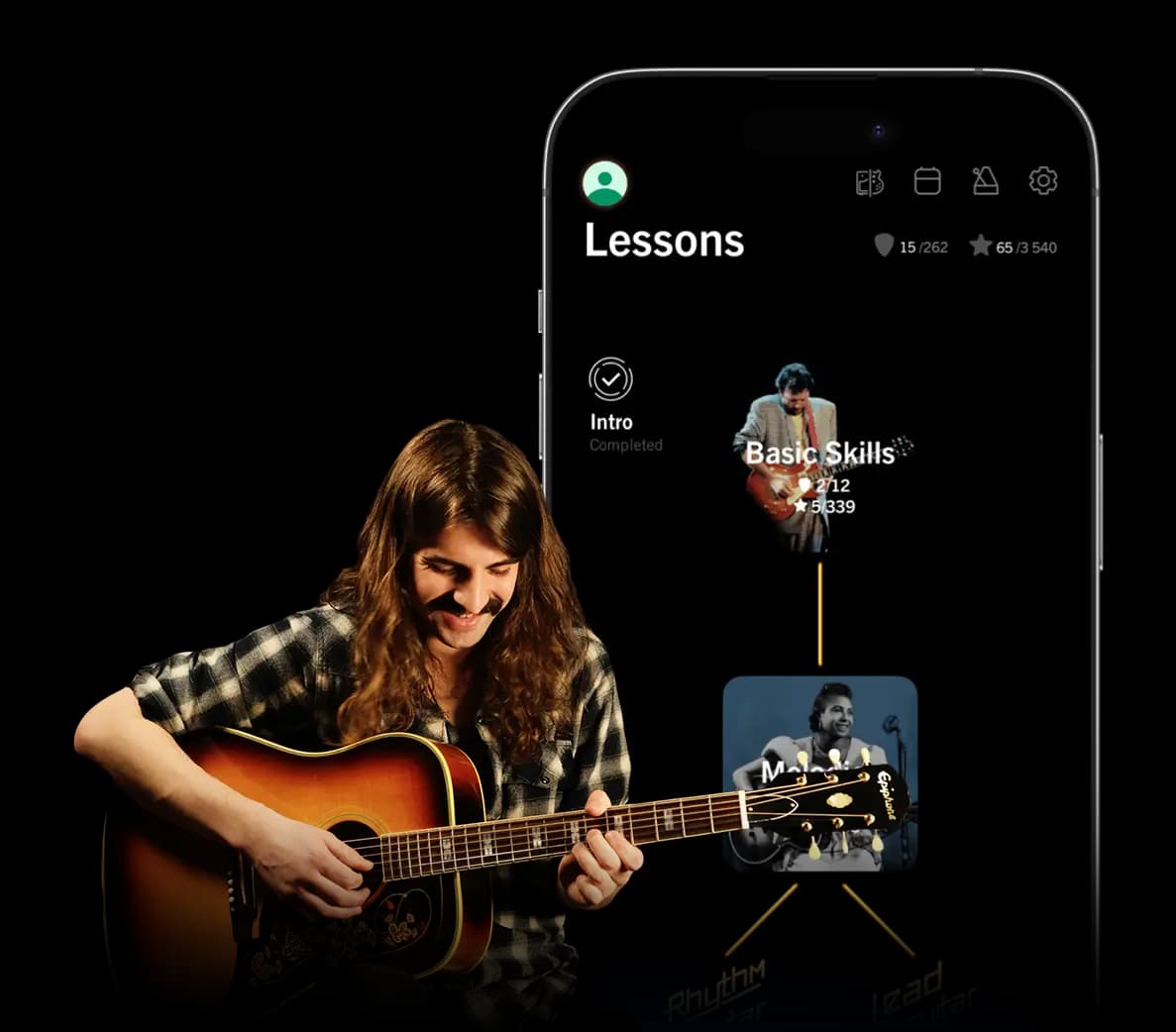
You can explore the full version of this course inside the Gibson App — along with step-by-step lessons, real-time feedback, and a personalized path designed to take your playing to the next level.
 Real-time feedback: The app listens while you play and gives instant visual and audio feedback.
- 🎮 Interactive gameplay with real song backing tracks.
- 🏆 Weekly leagues to compete and climb leaderboards.
- 🧭 Structured learning paths for step-by-step courses.
- ⚡ Deep-dive guides & genre courses to learn like the pros.

Continue in the Gibson App
The best guitar learning app for beginner and intermediate players.
You can explore the full version of this course inside the Gibson App — along with step-by-step lessons, real-time feedback, and a personalized path designed to take your playing to the next level.
- Real-time feedback: The app listens while you play and gives instant visual and audio feedback.
- 🎮 Interactive gameplay with real song backing tracks.
- 🏆 Weekly leagues to compete and climb leaderboards.
- 🧭 Structured learning paths for step-by-step courses.
- ⚡ Deep-dive guides & genre courses to learn like the pros.
Related Articles

Michel Santunione
2025-09-15