Unlock the Major Pentatonic: Your Path to Musical Mastery
Discover the major pentatonic scale and transform your guitar playing.
About the Course
Welcome to the world of the major pentatonic scale, where your guitar journey takes a vibrant turn. This course is designed to introduce you to the major pentatonic scale, a cornerstone of many musical styles. Whether you're a beginner or looking to expand your musical vocabulary, this course will help you unlock the fretboard and explore new sonic landscapes. You'll be surprised how quickly this becomes part of your sound, enhancing your ability to play melodies and solos with confidence.
This article focuses on Chapter 1 of the full course available inside the Gibson App. Chapter 1 lays the foundation for understanding the major pentatonic scale, setting the stage for the chapters that follow. Dive in and discover how this scale can transform your playing, and continue the full experience in the app to master the entire fretboard.
Chapter 1
Intro To This Course
Understanding the Major Pentatonic
The major pentatonic scale is a five-note scale that differs from the minor pentatonic scale, offering a unique sound. Starting from the root note G, the scale follows a specific interval pattern: root, major second, major third, perfect fifth, major sixth, and another root. This scale is versatile, fitting into various musical styles like rock, country, and blues. Songs like "Wish You Were Here" by Pink Floyd and "Sweet Home Alabama" by Lynyrd Skynyrd showcase its use. Throughout this course, you'll learn each of the five shapes of the major pentatonic scale, covering the entire fretboard. You'll also learn a melody in different positions, helping you internalize the scale's sound and develop your technique.
Exploring Musical Styles
The major pentatonic scale can be used over major chord progressions, often found in country and southern rock styles. It can also be mixed with the minor pentatonic scale in blues. This course will teach you how to play melodies in five different positions, using the same notes at the same pitch. You'll also learn extended scale shapes, allowing you to ascend and descend across the fretboard. By the end, you'll perform melodies and solos over a classic southern rock-inspired backing track, combining everything you've learned.
Shape 1
The Foundation of Shape 1
Shape number one of the G major pentatonic scale starts on the root note G, the lowest note within this shape. As you explore other shapes, the root note will appear on different strings and frets. This shape is crucial as it forms the basis for learning the major pentatonic scale. It aligns with the familiar E bar chord shape, making it easier to integrate into your playing. Using a finger per fret technique, you'll play the scale without awkward stretches, ensuring smooth transitions across strings.
Transposing and Mastering Shape 1
Shape one is transposable, allowing you to move it around the neck. By aligning the root note with the desired key, you can play the same scale shape in different keys. This flexibility is akin to moving an E bar chord shape. Understanding this shape is the first step in connecting the entire fretboard with a series of five shapes. Practice this shape to internalize its structure and sound, paving the way for more complex musical expressions.
Pattern
Building Technique with Sequences
Learning scale sequences is a powerful way to practice scales, enhancing your technique and musical vocabulary. Sequences help you internalize the scale shape, improve finger independence, and synchronize your hands. You can practice alternate picking or use hammer-ons and pull-offs. These sequences form the foundation for musical ideas, allowing you to incorporate them into solos as musical runs or phrases.
Mastering the Sequence
The sequence for shape number one involves ascending and descending through the scale, focusing on alternate picking and synchronization. This practice helps you internalize the shape, ensuring your fingers move independently and in sync with your picking hand. By mastering this sequence, you'll develop a deeper understanding of the scale and enhance your technical skills.
Melody
Crafting a Melodic Theme
The melody you'll learn is based on the G major pentatonic scale, played over a chord progression derived from the G major scale. The melody lands on chord tones, creating a satisfying musical experience. This exercise demonstrates how to create music with the scale, using target notes that relate to the accompanying chords.
Unlocking the Fretboard
Playing the melody in different positions helps you understand how to repeat phrases using the same notes at the same pitch. This approach unlocks the fretboard, allowing you to play melodies across various positions. Focus on synchronization and muting unused strings to keep your playing clean and precise.
The Full Course
Chapter 1: Shape #1
In Chapter 1, you begin your journey with the major pentatonic scale by learning Shape #1. This foundational shape starts on the root note G and is crucial for understanding the scale's structure. You'll explore how this shape aligns with familiar chord shapes, making it easier to integrate into your playing. By practicing sequences and melodies, you internalize the scale's sound and develop your technique.
Chapter 2: Shape #2
Chapter 2 introduces Shape #2, which starts from the second note of the G major pentatonic scale. This shape helps you visualize root notes in different positions, expanding your understanding of the fretboard. You'll learn a new scale sequence and melody, further enhancing your musical vocabulary and technical skills.
Chapter 3: Shape #3
In Chapter 3, you explore Shape #3, which connects with previous shapes to form a comprehensive framework of the G major pentatonic scale. This chapter emphasizes the importance of visualizing how shapes interlink, allowing you to navigate the fretboard with ease. You'll practice sequences and melodies, solidifying your grasp of the scale.
Chapter 4: Shape #4
Chapter 4 focuses on Shape #4, which introduces new root note positions and expands your fretboard knowledge. You'll learn to play melodies in different positions, unlocking the neck and enhancing your improvisational skills. This chapter emphasizes synchronization and clean playing, ensuring your technique is precise.
Chapter 5: Shape #5
In Chapter 5, you complete the major pentatonic scale system with Shape #5. This shape allows you to play the scale across the entire fretboard, linking all previous shapes. You'll practice sequences and melodies, mastering the scale's harmonic structure and developing your musical expression.
Chapter 6: Extended Shape 1
Chapter 6 introduces Extended Shape 1, which combines multiple positions of the G major pentatonic scale. You'll learn to ascend and descend through these shapes, covering large portions of the fretboard. This chapter emphasizes the importance of position shifts and synchronization, enhancing your ability to navigate the neck.
Chapter 7: Extended Shape 2
In Chapter 7, you explore Extended Shape 2, which uses fragments from different shapes to cover even more of the fretboard. This chapter highlights the versatility of the major pentatonic scale, allowing you to create musical phrases across various positions. You'll practice synchronization and muting, ensuring your playing is clean and precise.
Chapter 8: Extended Shape 3
Chapter 8 focuses on Extended Shape 3, which links all five shapes along a single string. This chapter emphasizes horizontal movement, unlocking the fretboard and expanding your improvisational possibilities. You'll practice synchronization and timing, ensuring your playing is fluid and expressive.
Chapter 9: Play a Full Song
In the final chapter, you put everything together to play a full song using all five shapes of the major pentatonic scale. This chapter emphasizes the importance of combining melodies and solos, showcasing your mastery of the scale. You'll perform over a backing track, demonstrating your ability to navigate the fretboard and create musical expressions.
By the end of this course, you'll have a comprehensive understanding of the major pentatonic scale, enabling you to play with confidence and creativity. From your first riff to full-stage confidence, this course takes you there step by step.
Intro To The Major Pentatonic
A Beginner's Introduction To The Major Pentatonic
This course is available in the Gibson App with full lessons, interactive exercises with real-time audio and video feedback.Try 7 days free
Instructor
Jamie Humphries

Jamie Humphries is a British session guitarist, educator, and author known for his extensive instructional work, live performances, and collaborations with legendary artists. He has toured with Brian May, performed with Queen, Jeff Beck, Mike Rutherford, and Henry Rollins, and was a member of The Australian Pink Floyd Show. On stage and video, he has appeared with Richie Kotzen, Vinnie Moore, Steve Morse, and Joe Satriani. Jamie has created a vast library of guitar lessons for the Gibson App and has contributed to Guitar World, Guitar Techniques, Guitarist, Total Guitar, and Premier Guitar. A former lecturer at ACM Guildford and BIMM Brighton, he also hosted his own guitar show on Sky TV.
Continue in the Gibson App
The best guitar learning app for beginner and intermediate players.
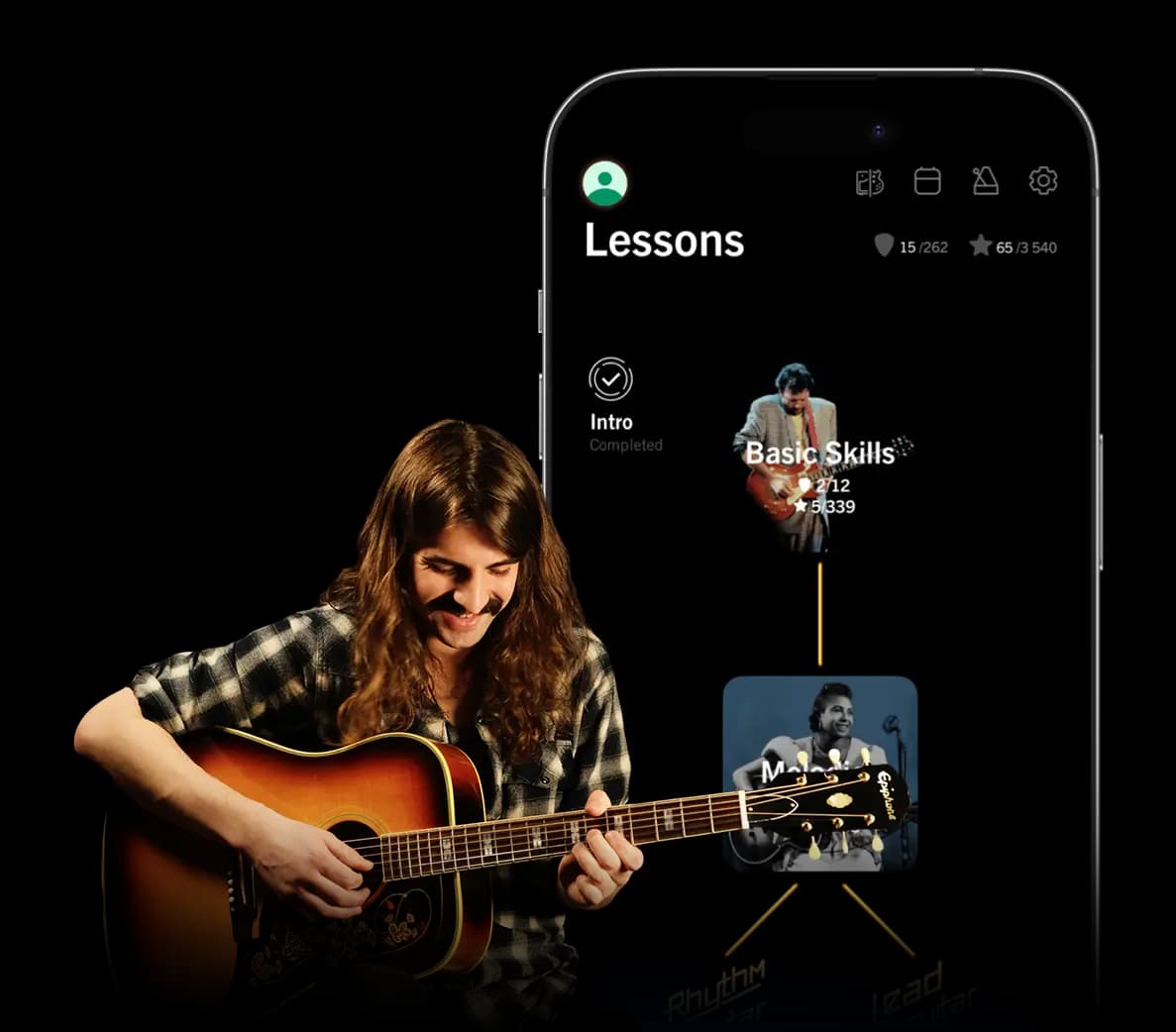
You can explore the full version of this course inside the Gibson App — along with step-by-step lessons, real-time feedback, and a personalized path designed to take your playing to the next level.
 Real-time feedback: The app listens while you play and gives instant visual and audio feedback.
- 🎮 Interactive gameplay with real song backing tracks.
- 🏆 Weekly leagues to compete and climb leaderboards.
- 🧭 Structured learning paths for step-by-step courses.
- ⚡ Deep-dive guides & genre courses to learn like the pros.
Intro To The Major Pentatonic
A Beginner's Introduction To The Major Pentatonic
This course is available in the Gibson App with full lessons, interactive exercises with real-time audio and video feedback.Try 7 days free
Instructor
Jamie Humphries
Jamie Humphries is a British session guitarist, educator, and author known for his extensive instructional work, live performances, and collaborations with legendary artists. He has toured with Brian May, performed with Queen, Jeff Beck, Mike Rutherford, and Henry Rollins, and was a member of The Australian Pink Floyd Show. On stage and video, he has appeared with Richie Kotzen, Vinnie Moore, Steve Morse, and Joe Satriani. Jamie has created a vast library of guitar lessons for the Gibson App and has contributed to Guitar World, Guitar Techniques, Guitarist, Total Guitar, and Premier Guitar. A former lecturer at ACM Guildford and BIMM Brighton, he also hosted his own guitar show on Sky TV.
Continue in the Gibson App
The best guitar learning app for beginner and intermediate players.
You can explore the full version of this course inside the Gibson App — along with step-by-step lessons, real-time feedback, and a personalized path designed to take your playing to the next level.
- Real-time feedback: The app listens while you play and gives instant visual and audio feedback.
- 🎮 Interactive gameplay with real song backing tracks.
- 🏆 Weekly leagues to compete and climb leaderboards.
- 🧭 Structured learning paths for step-by-step courses.
- ⚡ Deep-dive guides & genre courses to learn like the pros.
Related Articles

Michel Santunione
2025-10-27