Discover the Soulful Sound of Texas Blues
Dive into the rhythmic world of Texas Blues with this beginner-friendly guide.
About the Course
Texas Blues is a genre that pulses with energy and emotion, characterized by its aggressive and virtuosic guitar style. In this course, you'll embark on a journey to master the rhythm guitar techniques that define Texas Blues, inspired by legends like Stevie Ray Vaughan. Whether you're a beginner or an experienced player, this course is designed to make these iconic sounds accessible and achievable. By the end, you'll be surprised at how quickly these riffs become part of your musical vocabulary. This article focuses on Chapter 1 — the starting point of the full course inside the Gibson App. Dive in and discover how Chapter 1 lays the foundation for the chapters that follow, inviting you to continue the full experience in the app.
Chapter 1
Intro To This Course
Achieving the Texas Blues Sound
Texas Blues is known for its aggressive and virtuosic guitar style, often performed with a shuffle fill. To achieve this sound, start by selecting the middle two pickups on your guitar for a warmer tone, while still retaining the bite of the bridge pickup. A classic amp tone with spring reverb can help emulate the iconic sound of Stevie Ray Vaughan, who often used a green style overdrive to push his amplifiers into a searing overdrive. By adding overdrive, you roll off some of the low end and push the mid-range frequency, creating a stylistically appropriate tone.
Riffs and Rhythms
When it comes to riffs, take a classic blues style riff and give it more swing, swagger, and attitude. This course will explore different riffs based on Stevie Ray Vaughan's playing style, helping you achieve a Texas Blues rhythm guitar style. You'll learn riffs that utilize several concepts, focusing on the classic one, four, five blues progression in the key of E. These riffs will be achievable, but require effort and practice. By the end, you'll be playing authentic Texas Blues rhythm guitar.
Texas Turnaround
Essential Riff Techniques
The intro riff serves as the foundation for your Texas Blues style piece, appearing throughout the rhythm performance as a breakdown section. Inspired by Stevie Ray Vaughan's "Pride and Joy," this riff is essential for achieving the Texas Blues sound. It involves playing the fifth fret of the B string and the open top E string simultaneously, creating a unison. The riff features a swung rhythm, referred to as a swing shuffle or broken triplet rhythm, which is crucial for the Texas Blues feel.
Swing and Shuffle
The shuffle rhythm is vital when playing Texas Blues, providing a lazy yet tight feel. This riff simplifies Stevie Ray Vaughan's style, focusing on the shuffle and the importance of internalizing the pulse with your internal metronome. Observing the shuffle is key to achieving a Texas Blues rhythm style.
Shuffle Groove
Emphasizing the Offbeat
Riff number one is based on a 12-bar sequence around a one, four, five progression in the key of E. It emphasizes the offbeat while observing the swing rhythm. Starting with an E7 chord, followed by upstrokes, and transitioning to an A major chord, this riff mirrors the DNA of the previous riff.
Aggressive Rhythm Techniques
The B7 chord introduces a one-bar figure, followed by a drop to the A7 chord. The riff concludes with a return to the E7 chord, with a slightly different ending. Adding a mute on the downstroke enhances the stylistic sound, making it more aggressive and helping the rhythm.
Double Stops Riff
Texas Fire in Rhythm
Inspired by "Scuttle Buttin'" by Stevie Ray Vaughan, this riff incorporates elements that nod to the iconic piece. It starts with an open low E, followed by barre chords and a swing rhythm. The riff includes a lick similar to the intro riff, emphasizing the swing rhythm.
Combining Chord Voicings
The A7 chord introduces a familiar voicing, followed by a little lick with open strings. The B7 chord uses a different voicing, eliminating the traditional top E note. This riff combines chord voicings and single note riffs, creating a Texas Blues style sound.
Melodic Fills Riff
Exploring New Voicings
Riff number three introduces new chord voicings and melodic fills based on the E minor pentatonic scale. The E7 chord voicing is played on the top three strings, resembling a D7 shape. The riff includes a descending E minor pentatonic figure.
Pentatonic Phrasing
The A7 voicing mirrors the DNA of the first riff, followed by a familiar lick. The B7 riff uses a different chord voicing due to position constraints. The combination of chord voicings and single note riffs creates a Texas Blues style sound.
Single Note Riff
Cold Shot Inspiration
Inspired by "Cold Shot," this riff focuses on single note figures. It starts on the A string, walking chromatically back to the root note. The riff is repeated over the A chord, retaining the same fingering and shape.
Adding Flair to Chords
The B riff is similar to the A riff but moved up a whole tone. The riff concludes with a chromatic climb and chord voicings reminiscent of "Texas Flood." These voicings nod to Stevie Ray Vaughan's jazz influence, creating a Texas Blues style sound.
Walking Riff
Pride and Joy Reference
Riff number five references "Pride and Joy," outlining a one, four, five progression in E major. It includes minor to major tonality and a Texas shuffle style.
Mixing Single Notes and Chords
The riff starts with an open low E, followed by chromatic movements and chord transitions. It combines single note riffing with chords, creating a Texas Blues sound.
Play-Along
Combining Riffs
In this play-along session, you'll combine all the riffs learned in previous lessons and play them over a Texas Blues backing track. This exercise helps solidify your understanding of the Texas Blues rhythm style.
Performance
The Full Course
Chapter 1: Rhythm
Chapter 1 lays the foundation for Texas Blues rhythm guitar, focusing on achieving the iconic sound through riffs inspired by Stevie Ray Vaughan. You'll explore different concepts and approaches to the classic one, four, five blues progression in the key of E, mastering the shuffle rhythm and chord voicings.
Chapter 2: Lead
In Chapter 2, you'll delve into Texas Blues lead guitar techniques, drawing inspiration from Stevie Ray Vaughan, Albert Collins, and Gary Clark Jr. This chapter introduces expressive string bends, bluesy double stops, and melodic phrasing, helping you achieve an authentic Texas Blues soloing style.
Chapter 3: Advanced Techniques
Chapter 3 focuses on advanced techniques, including fast hammer-ons, pull-offs, and chromatic passing notes. You'll learn how to incorporate these techniques into your playing, adding flair and complexity to your Texas Blues sound.
Chapter 4: Performance
The final chapter emphasizes performance, combining all the techniques learned in previous chapters. You'll play along with backing tracks, honing your skills and achieving a confident Texas Blues style.
By the end of this course, you'll have a deep understanding of Texas Blues rhythm and lead guitar, equipped with the skills to play authentic Texas Blues solos and riffs. From your first riff to full-stage confidence, this course takes you there step by step.
Intro To Texas Blues
A Beginner's Guide to Texas Blues.
This course is available in the Gibson App with full lessons, interactive exercises with real-time audio and video feedback.Try 7 days free
Instructor
Jamie Humphries

Jamie Humphries is a British session guitarist, educator, and author known for his extensive instructional work, live performances, and collaborations with legendary artists. He has toured with Brian May, performed with Queen, Jeff Beck, Mike Rutherford, and Henry Rollins, and was a member of The Australian Pink Floyd Show. On stage and video, he has appeared with Richie Kotzen, Vinnie Moore, Steve Morse, and Joe Satriani. Jamie has created a vast library of guitar lessons for the Gibson App and has contributed to Guitar World, Guitar Techniques, Guitarist, Total Guitar, and Premier Guitar. A former lecturer at ACM Guildford and BIMM Brighton, he also hosted his own guitar show on Sky TV.
Continue in the Gibson App
The best guitar learning app for beginner and intermediate players.
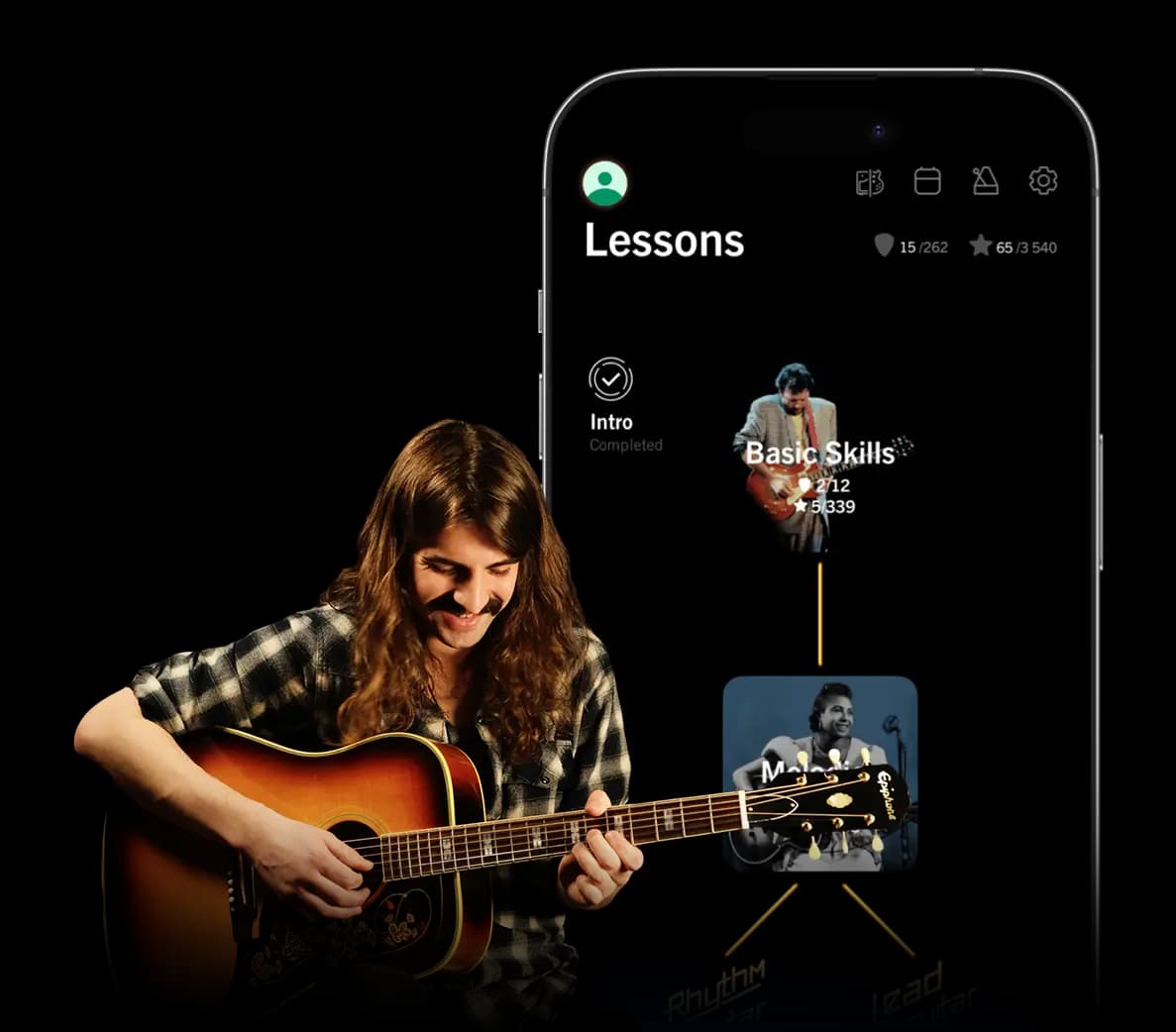
You can explore the full version of this course inside the Gibson App — along with step-by-step lessons, real-time feedback, and a personalized path designed to take your playing to the next level.
 Real-time feedback: The app listens while you play and gives instant visual and audio feedback.
- 🎮 Interactive gameplay with real song backing tracks.
- 🏆 Weekly leagues to compete and climb leaderboards.
- 🧭 Structured learning paths for step-by-step courses.
- ⚡ Deep-dive guides & genre courses to learn like the pros.

Intro To Texas Blues
A Beginner's Guide to Texas Blues.
This course is available in the Gibson App with full lessons, interactive exercises with real-time audio and video feedback.Try 7 days free
Instructor
Jamie Humphries
Jamie Humphries is a British session guitarist, educator, and author known for his extensive instructional work, live performances, and collaborations with legendary artists. He has toured with Brian May, performed with Queen, Jeff Beck, Mike Rutherford, and Henry Rollins, and was a member of The Australian Pink Floyd Show. On stage and video, he has appeared with Richie Kotzen, Vinnie Moore, Steve Morse, and Joe Satriani. Jamie has created a vast library of guitar lessons for the Gibson App and has contributed to Guitar World, Guitar Techniques, Guitarist, Total Guitar, and Premier Guitar. A former lecturer at ACM Guildford and BIMM Brighton, he also hosted his own guitar show on Sky TV.
Continue in the Gibson App
The best guitar learning app for beginner and intermediate players.
You can explore the full version of this course inside the Gibson App — along with step-by-step lessons, real-time feedback, and a personalized path designed to take your playing to the next level.
- Real-time feedback: The app listens while you play and gives instant visual and audio feedback.
- 🎮 Interactive gameplay with real song backing tracks.
- 🏆 Weekly leagues to compete and climb leaderboards.
- 🧭 Structured learning paths for step-by-step courses.
- ⚡ Deep-dive guides & genre courses to learn like the pros.
Related Articles

Michel Santunione
2025-10-27